You’ve probably scrolled past photos of lush, soil-free herb gardens sitting on someone’s kitchen counter and wondered if that’s really as easy as it looks. It is, and figuring out hydroponics how to start is a lot simpler than most tutorials make it seem.
Here’s the promise: by the end of this guide, you’ll know exactly what equipment to buy, which plants to grow first, and how to avoid the mistakes that make most beginners quit within the first month. We’ll walk through system types, lighting, nutrients, troubleshooting, budgeting, and a simple weekend build you can start this Saturday.
Let’s break it down step by step, starting with what hydroponics actually is and why so many people are searching for it right now.
What Is Hydroponics, Exactly?
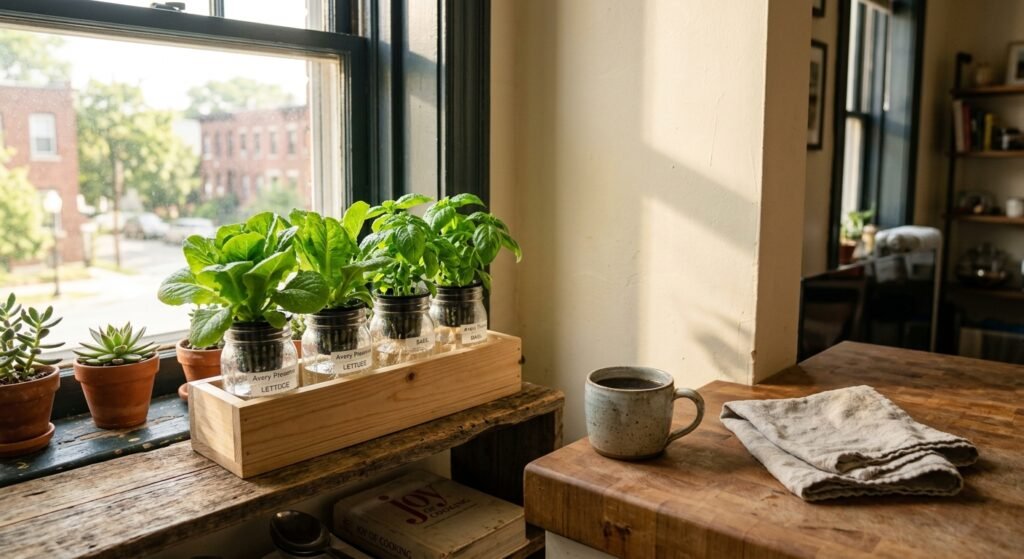
Hydroponics is a method of growing plants in nutrient-rich water instead of soil. Roots sit directly in (or near) water that’s been mixed with everything the plant needs to thrive.
Picture it like ordering groceries delivered straight to your door instead of driving to five different stores. The plant doesn’t waste energy searching for food in dirt — it’s handed directly to the roots.
This is exactly why so many apartment dwellers and small-space homeowners across the U.S. are turning to this growing method. No soil means no mess, no random weeds, and no bag of potting mix taking up closet space.
Here’s the kicker — hydroponic plants often grow noticeably faster than their soil-grown counterparts. Because the roots aren’t working overtime to find nutrients, that saved energy goes straight into growth instead.
Why Hydroponics Has Become So Popular Across the U.S.
American households are dealing with smaller living spaces, busier schedules, and rising grocery prices. Hydroponics solves a surprising number of these problems at once, which is part of why so many people search for hydroponics how to start guides every single month.
Here’s what’s driving the trend:
- Space efficiency — compact systems fit on a windowsill, countertop, or small shelf
- Faster harvests compared to traditional dirt gardening
- Less mess — no dragging soil bags through the house
- Year-round growing, regardless of your local climate or season
- Water savings — hydroponic systems typically use far less water than soil gardening
If you live somewhere with harsh winters or limited outdoor space, this method solves problems that traditional gardening simply can’t touch.
Hydroponics How to Start: The Complete Beginner Framework
Here’s the part most YouTube tutorials overcomplicate. Understanding hydroponics how to start really comes down to four core decisions, and none of them require a science background.
Hydroponics How to Start with the Right System Type
Beginners should pick a forgiving, low-maintenance setup rather than jumping into something complicated. The most common starter systems include:
- Deep Water Culture (DWC) — roots hang directly in nutrient-rich water; cheap and beginner-friendly
- Wick systems — passive, no pumps or electricity required, ideal for herbs
- Kratky method — completely hands-off, with zero moving parts
- Ebb and flow — slightly more advanced, but great once you’ve got the basics down
If you’re unsure where to begin, the Kratky method is often the easiest entry point for first-timers learning hydroponics how to start on a tight budget. You fill a container, mix in nutrients, drop in a seedling, and let nature do the rest.
Set Up Proper Grow Lighting
Not every home gets six-plus hours of direct sunlight, which is where indoor grow lights come in. LED grow lights mimic natural sunlight and won’t spike your electric bill the way older fluorescent setups did.
Look for full-spectrum LED lights — they cover the specific light wavelengths plants need for healthy photosynthesis. Most beginner kits include a simple timer, so your lights turn on and off automatically without you thinking about it.
Nail Down Your Nutrient Solution
In hydroponics, 100% of a plant’s food comes from the water itself, since there’s no soil to fall back on. Getting your nutrient mix right matters more here than in any other growing method, and it’s a step a lot of hydroponics how to start guides skip over too quickly.
A basic hydroponic nutrient solution needs three main components:
- Nitrogen — supports leafy, green growth
- Phosphorus — strengthens roots and flowering
- Potassium — supports overall plant health and disease resistance
Pre-mixed beginner nutrient solutions are widely sold online and at garden centers, and they remove almost all the guesswork for anyone new to hydroponics.
Pick Easy Plants for Your First Grow
Skip tomatoes and peppers for now — save those for round two. Instead, start with plants that forgive small mistakes:
- Lettuce
- Basil
- Spinach
- Mint
- Most leafy herbs
These grow quickly, tolerate minor errors in pH or nutrient balance, and give you a confidence boost before tackling fussier crops.
Hydroponics How to Start on a Budget
Cost is one of the biggest questions people have before committing. The good news is that learning hydroponics how to start doesn’t require a big upfront investment.
Here’s a rough breakdown for a single-plant beginner setup:
- Container and net pot: $10-15
- Growing medium: $8-12
- Nutrient solution starter kit: $15-25
- Optional air pump: $10-20
- Optional LED grow light: $25-50
Most beginners can get a working system running for under $75, and many manage it for less by reusing containers they already have at home. Compare that to the cost of a raised garden bed with soil, tools, and fencing to keep pests out, and hydroponics starts to look like the budget-friendly option.
Building Your First DIY Hydroponic Setup at Home
Ready to actually build something? This is a realistic weekend project, not a multi-week construction job, and it’s the fastest way to answer the hydroponics how to start question for yourself.
What you’ll need:
- A plastic container or five-gallon bucket
- A net pot (or a cut plastic cup with drainage holes)
- A growing medium like rockwool cubes or clay pebbles
- Nutrient solution
- A small air pump (optional, but it helps oxygenate the roots)
Steps to follow:
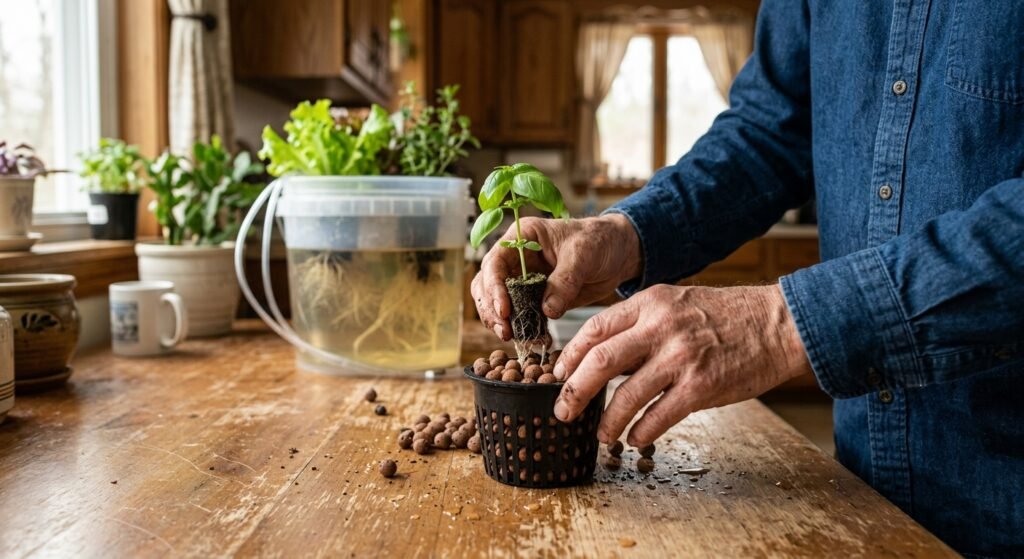
- Fill your container with water and mix in your nutrient solution according to the label instructions.
- Place your seedling into the net pot, packing growing medium gently around the roots.
- Position the net pot so the roots dip just below the waterline.
- Set the container near a bright window or under your grow light.
- Check water levels every few days and top off as it evaporates.
That’s genuinely the whole process. No plumbing, no wiring diagrams, no engineering degree required.
Hydroponics vs. Traditional Soil Gardening: A Quick Comparison
A lot of beginners want to know if switching from soil is actually worth the effort. Here’s an honest side-by-side look:
- Growth speed: Hydroponic crops often mature 20-30% faster than soil-grown versions.
- Water usage: Hydroponic systems recirculate water, using up to 90% less than soil gardening.
- Pest control: Fewer soil-borne pests and diseases to worry about.
- Space required: A hydroponic setup can fit in a closet; soil gardening usually needs a yard.
- Upfront cost: Soil gardening is cheaper to start, but hydroponics pays off faster in yield.
Neither method is “wrong,” but if you’re short on space or time, hydroponics usually wins the comparison.
Common Mistakes When Learning Hydroponics How to Start
Even with a solid setup, a few small oversights can slow your progress. Here’s what trips up most first-time growers working through hydroponics how to start on their own:
- Ignoring pH levels. Most plants prefer a pH between 5.5 and 6.5. Outside that range, roots struggle to absorb nutrients properly, no matter how good your solution is.
- Overcrowding the roots. Give each plant enough breathing room, even in a compact system.
- Forgetting to refresh the water. Stagnant water invites algae and bacteria growth fast.
- Using untreated tap water. Chlorine can irritate root systems — let water sit out for 24 hours, or use a dechlorinating drop before adding it to your reservoir.
- Skipping a nutrient schedule. Random dosing leads to nutrient burn or deficiency; stick to the label’s recommended timeline.
A simple weekly habit fixes most of this: check your water for cloudiness or odd smells, and adjust before problems spiral.
Troubleshooting: What to Do When Plants Look Unhappy
Even a well-planned setup runs into hiccups. Here’s how to read the warning signs your plants are giving you.
- Yellowing leaves. Usually a nitrogen deficiency or a pH that’s drifted out of range. Test your water first before adding more nutrients.
- Slimy, brown roots. A classic sign of root rot, often caused by low oxygen or water that’s sat too long without a change.
- Stunted growth. Could mean insufficient light — move your setup closer to a window or extend your grow light schedule by a couple of hours.
- White crust on the container. This is usually mineral buildup from nutrient salts and calls for a full reservoir cleaning.
- Wilting despite wet roots. Often a sign of nutrient burn from too strong a solution; dilute with plain water and ease back in slowly.
Catching these signs early is far easier than trying to save a plant that’s been struggling for weeks. Check your setup every couple of days, even if it only takes thirty seconds.
How Long Until You See Real Results?
This is usually the first question beginners ask, and the answer is more encouraging than most expect. Leafy greens like lettuce are typically ready to harvest in three to four weeks.
Herbs take a little longer, often five to six weeks for a full, usable harvest. Compare that to soil gardening, where the same crops frequently take noticeably longer to mature.
That speed difference is a major reason so many people are researching hydroponics how to start right now, especially in cities and suburbs where space and time are both limited.
Seasonal Considerations for U.S. Growers
Climate varies wildly across the country, and it affects indoor hydroponic setups more than people expect. If you live somewhere with cold winters, indoor temperature drops near windows can slow growth even with grow lights running.
Keep your system away from drafty windowsills once outdoor temperatures dip below freezing. A small space heater nearby (kept a safe distance away) can help maintain the 65-75°F range most hydroponic plants prefer.
In hot, humid regions, the opposite problem shows up. Warm water holds less dissolved oxygen, which can stress roots during summer months.
A small air pump becomes more valuable in this case, along with checking your reservoir more frequently since evaporation happens faster in the heat. None of this changes the core hydroponics how to start process — it just means adjusting for your specific climate zone.
Choosing the Best Spot in Your Home
Placement matters more than people expect. A south-facing window usually gets the most consistent light throughout the day in most U.S. regions.
If natural light is limited, don’t force it — a modest LED grow light solves the problem without needing to rearrange your furniture. Keep your setup away from direct heating or cooling vents, since sudden temperature swings stress young roots.
Kitchens tend to work well because they’re humid, warm, and close to where you’ll actually use the herbs you grow.
Scaling Your System as You Gain Confidence
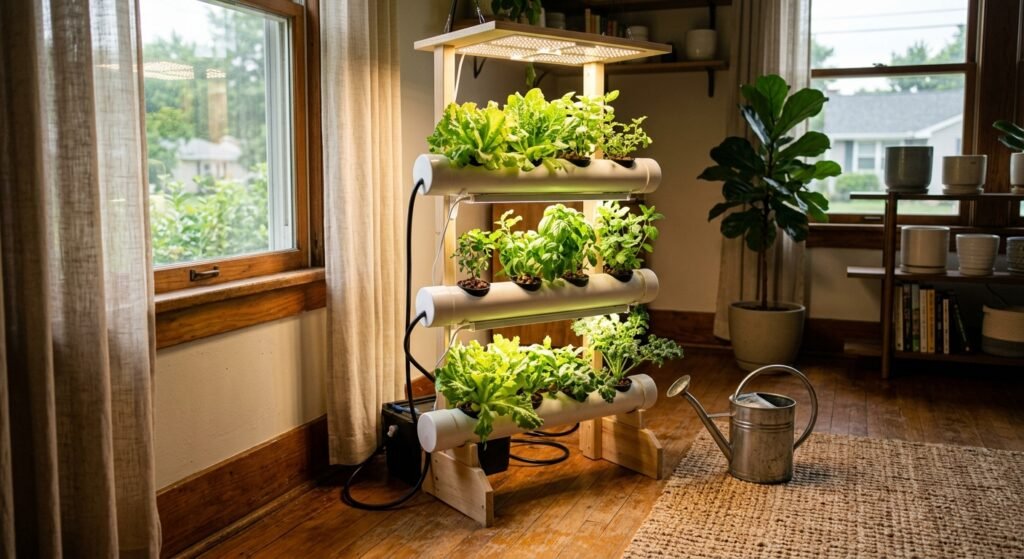
Once your first lettuce harvest lands on your dinner plate, the itch to expand kicks in fast. Many growers move on to vertical towers, multi-tier shelving systems, or small grow tents with automated lighting.
The learning curve from beginner to intermediate is smaller than it looks from the outside. Once you understand water, light, and nutrients, adding more containers is mostly a matter of repetition.
Some growers eventually add:
- pH and EC meters for more precise nutrient control
- Automated dosing pumps that adjust nutrients on a schedule
- Multiple grow zones for different plant types at once
- Reservoir chillers to keep root temperatures stable in warmer climates
None of this is necessary for your first attempt, but it’s worth knowing where the path leads once you’ve mastered the basics of hydroponics how to start.
Is Hydroponics Right for You?
Not every household needs a hydroponic setup, and that’s fine. But a few signs suggest it’s worth trying:
- You live in an apartment or condo with little to no outdoor space
- You’ve tried soil gardening before and struggled with pests or inconsistent results
- You want fresh herbs and greens without weekly grocery runs
- You enjoy hands-on projects but don’t have hours to dedicate each week
- You’re curious about sustainable, water-efficient growing methods
If two or three of these sound like you, there’s a good chance you’ll enjoy learning hydroponics how to start and sticking with it past the first harvest.
Final Thoughts on Getting Started
Figuring out hydroponics how to start isn’t about becoming a full-time farmer overnight. It’s about taking back a small amount of control over what ends up on your dinner plate, even from a studio apartment or a cramped city kitchen.
Start small, pick one easy herb, and get your first container running this week instead of waiting for the “perfect” setup that never actually arrives. Once you’ve walked through hydroponics how to start on your own kitchen counter, scaling up becomes second nature.
Your future self, snipping fresh basil straight from the counter, will be glad you didn’t wait.
Frequently Asked Questions About Hydroponics How to Start
Is hydroponics expensive to start?
Not necessarily. A basic beginner setup using a bucket, net pot, and nutrient solution can cost under $75, making hydroponics how to start far more affordable than most people assume.
Do I need direct sunlight for hydroponics?
No. Many growers rely entirely on LED grow lights, which work well even in apartments with limited natural light throughout the day.
What’s the easiest plant for a first hydroponic attempt?
Lettuce and basil are the most forgiving choices for anyone learning hydroponics how to start, since both tolerate minor mistakes in pH and nutrient balance.
How often do I need to change the water?
Most beginner systems need a water change every one to two weeks, depending on container size and how fast the plant is growing.
Can hydroponics be done without electricity?
Yes. Wick systems and the Kratky method both work without pumps, making them ideal for anyone new to hydroponics how to start without investing in equipment right away.
How much space do I actually need?
A single-plant hydroponic setup can fit on a windowsill or small counter space, so you don’t need a dedicated room to begin.
Is hydroponic produce safe to eat?
Yes, hydroponic produce is just as safe and nutritious as soil-grown produce, and many growers find it’s actually cleaner since there’s no dirt involved.
What’s the single biggest mistake beginners make?
Skipping pH checks is the most common error. Getting this one habit right solves most of the problems people run into while learning hydroponics how to start..